Interview — Masks, ego and exposure, by Ruben Orgye.
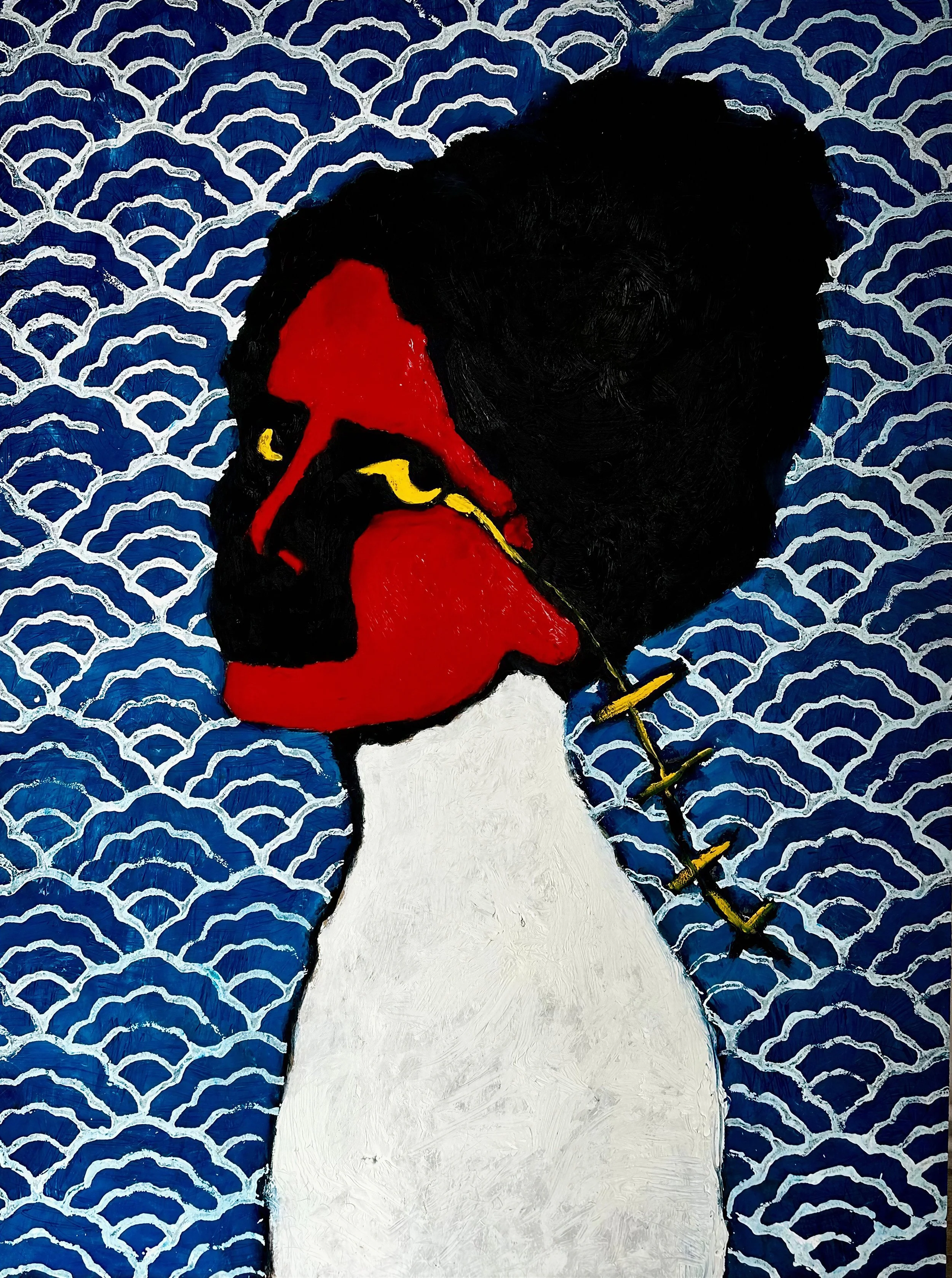
On masks, exposure, desire, and the performance of identity online.
In a time dominated by hyper-exposure, the search for validation, and emotional fragility, Rubén Orgye’s work emerges as a sensitive mirror of contemporary society. From the sensuality of the body to the labyrinths of the mind and the weight of the digital ego, his practice proposes an urgent, honest, and deeply human reflection.
What follows is an intimate and revealing interview.
— Your work began by exploring the body and sensuality. Where did that first phase come from?
My first phase came from a visceral need: to explore sensuality, desire, skin, carnal vices without guilt. The body was a field of freedom—and also a mirror of our most intimate fantasies.
But soon I discovered that even when someone shows themselves naked, they still don’t reveal their true self. Behind the body there is another, much deeper layer: the mind and consciousness—what we almost never allow to be seen.
— When does that shift from the body to the mind appear?
When I understood that flesh alone was not enough.
The second phase of my work is about exploring what is hidden: memories, the unconscious, the emotional baggage we all carry.
I began to paint not only what is visible, but what is felt internally. That inner universe seemed to me far more vast and authentic.
— Technically, oil paint plays a very important role in your work. Why?
Because it allows me to enter emotional depth.
Acrylic is immediate—wild, impulsive. But oil has memory, texture, time…
With it I can create blends, nuances, and atmospheres that better represent my inner imagery.
— You say you work like a child, even using your fingers. What does that mean in your creative process?
It means not thinking.
If I think, I draw forms I already know—forms I’ve studied—forms the mind automatically recreates.
When I draw like a child—using my fingers, without rules, without technique taking over—I’m drawing from the unconscious.
It’s an act of unlearning in order to build something truly personal.
— Your work also includes a critique of digital society and hyper-exposure. What interests you about that?
We live in a society where we show everything—except what is essential.
Technology connects us and disconnects us at the same time: you can be one centimeter from your partner and not be present.
I’m interested in documenting this historical moment: the need for validation, digital masks, contemporary loneliness, empty communication, the ego inflated by social media. All of this affects how we feel, how we love, and how we relate to one another.
— Your experience with anxiety appears as a crucial element. How did it influence your art?
Anxiety confronts you with death without you actually dying.
It’s a brutal experience that forces you to look inward—to observe your real and imagined fears.
I lived through very intense episodes where I felt I was going to die.
And that’s when I understood that fear is capable of dominating you, invalidating you, making you believe what isn’t real.
That process made me rethink my work and my life.
It led me to seek mental peace amid the noise of the modern world.
— Ego appears as a recurring theme. What role does it play in your work?
Ego is the mask we show to the world.
We’re taught to relate through that mask: what we want others to desire in us, what we want them to admire.
But that generates emptiness.
My work tries to reveal that false self, to question it, to show the emotional fragility behind it.
— You also mention the influence of technology and artificial intelligence. What role does it play in your artistic view?
Technology is transforming how we live, how we think, how we relate.
It’s a new revolution—like the Industrial Revolution, or the 20th-century avant-gardes.
I’m interested in bearing witness to how this hyper-communication, this digital dependency, this overexposure, affect human intimacy.
In the future it’s likely my work will expand into installation, performance, or sculpture, to better represent that duality between connection and isolation.
— Where do you see your work evolving now?
I’m researching ancient civilizations, ritual masks, mythologies, symbolisms.
I want to blend the ancestral with the digital, the oneiric with the technological, the human with the immortal.
My future work will seek to represent that border between reality and fiction, between consciousness and the unconscious, between ego and essence.

I began to paint not only what can be seen, but what is felt internally. That inner universe seemed to me far more vast and authentic.
— Technically, oil painting holds a very important place in your work. Why?
Because it allows me to enter emotional depth. Acrylic is immediate—wild, impulsive. But oil has memory, texture, time… With it I can create blends, nuances, and atmospheres that better represent my inner imagery.
— You say you work like a child, even with your fingers. What does that mean in your creative process?
It means not thinking. If I think, I draw forms I already know—forms I’ve studied—forms the mind recreates automatically. When I draw like a child—with my fingers, without rules, without technique taking over—I’m drawing from the unconscious.
It’s an act of unlearning in order to build something truly personal.
— Your work also includes a critique of digital society and hyper-exposure. What interests you about that subject?
We live in a society where we show everything—except what is essential. Technology connects us and disconnects us at the same time: you can be one centimeter from your partner and not be present.
I’m interested in documenting this historical moment: the need for validation, digital masks, contemporary loneliness, empty communication, the ego inflated by social media. All of that affects how we feel, how we love, and how we relate to one another.
— Your experience with anxiety appears as a crucial element. How did it influence your art?
Anxiety confronts you with death without you actually dying. It’s a brutal experience that forces you to look inward, to observe your real and imagined fears.
I lived through very intense episodes where I felt I was going to die. And that’s when I understood that fear can dominate you, invalidate you, make you believe what isn’t real.
That process made me rethink my work and my life. It led me to seek mental peace amid the noise of the modern world.
— Ego appears as a recurring theme. What role does it play in your work?
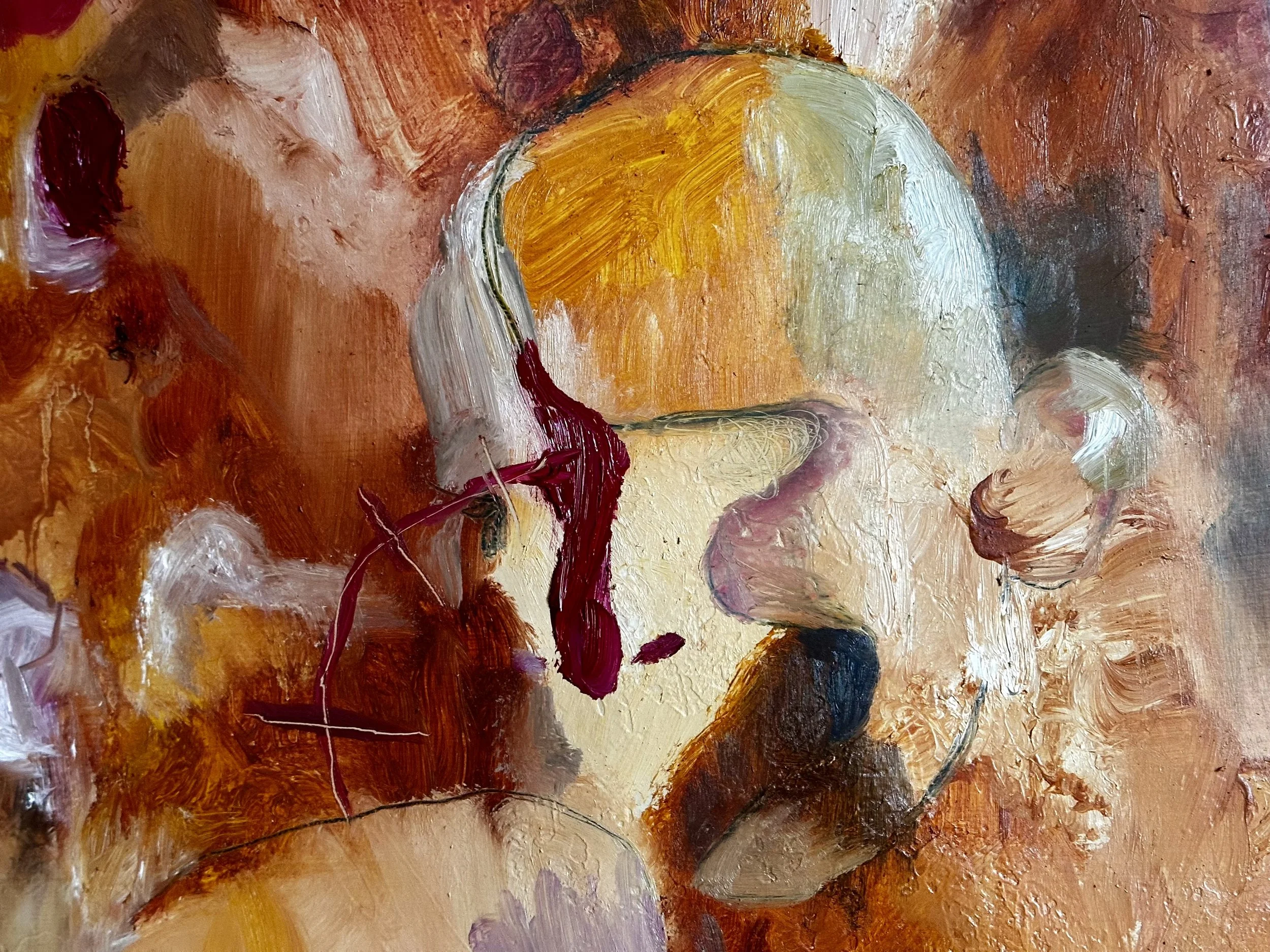
Detail of painting “A Midsummer Night’s Dream”
Ego is the mask we show to the world. We’re taught to relate through that mask: what we want others to desire in us, what we want them to admire.
But that creates emptiness. My work tries to reveal that false self, to question it, to show the emotional fragility behind it.
— You also mention the influence of technology and artificial intelligence. What role does it play in your artistic view?
Technology is transforming how we live, how we think, how we relate. It’s a new revolution—like the Industrial Revolution, or the 20th-century avant-gardes.
I’m interested in bearing witness to how this hyper-communication, this digital dependency, this overexposure, affect human intimacy.
In the future it’s likely my work will expand into installation, performance, or sculpture, to better represent that duality between connection and isolation.
— Where do you see your work evolving now?
I’m researching ancient civilizations, ritual masks, mythologies, symbolisms. I want to blend the ancestral with the digital, the oneiric with the technological, the human with the immortal.
My future work will seek to represent that border between reality and fiction, between consciousness and the unconscious, between ego and essence.
